
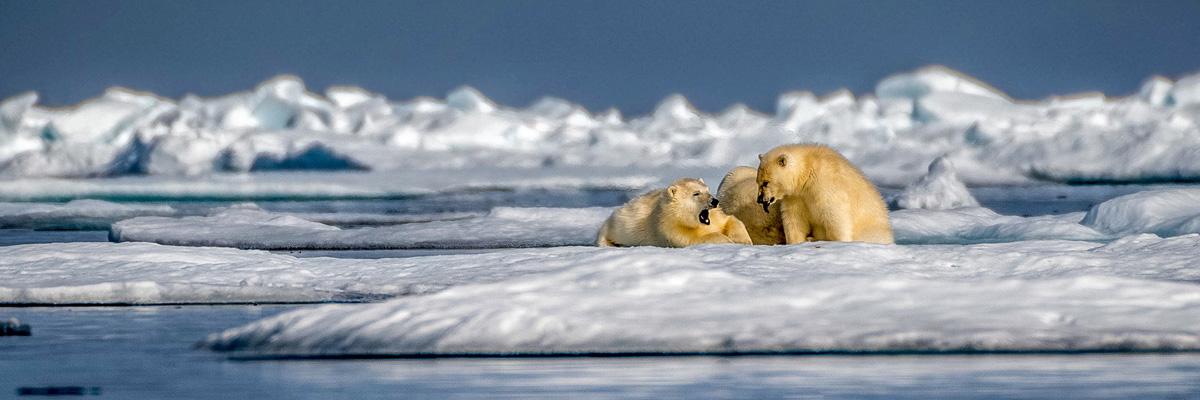

High Arctic Expedition: Where Art Meets Land
August 31 to September 14, 2027
From $13,995 to $25,735 USD
Aboard the Ocean Nova
Starts: Ottawa, ON, Canada
Ends: Toronto, ON, Greenland
Charter Flights:
Northbound Charter Flight: $1,250 USD
Ottawa, ON, Canada to Resolute, Nunavut, Canada. Early-morning departure.
Southbound Charter Flight: $1,250 USD
Nuuk, Greenland, to Toronto, ON, Canada. Evening arrival.
Trip Summary
A century ago, A.Y. Jackson and Dr. Frederick Banting journeyed north aboard the Beothic, following supply routes along the coastlines of Greenland, Baffin Island, and Ellesmere Island. For both men—one a celebrated painter, the other a renowned scientist with an artist’s heart—the Arctic’s luminous skies, shifting ice, and sculpted landscapes proved transformative. Their sketches and canvases captured a vision of the North that would profoundly influence Canadian art and identity. In the years that followed, Lawren Harris made his own Arctic journeys, further cementing the North as a powerful muse for artists of the era.
This expedition invites you to experience those same northern environments—sailing through fjords where glaciers calve into silent waters and distant mountains gleam beneath the endless summer light. You’ll stand in places that once stirred Banting, Jackson, and Harris, witnessing firsthand the light and scale that inspired a movement and shaped an enduring artistic legacy.
In partnership with the McMichael Canadian Art Collection, steward of the Group of Seven’s legacy, this voyage contributes to new research into those early Arctic expeditions and their impact. On board, John Geoghegan, curator at the McMichael, will lead illustrated talks, field observations, and conversations that connect art, story, and place. Together, you’ll explore how the North has shaped Canada’s imagination—and how artists and travellers can engage it today with respect, curiosity, and care.
As you travel, you’ll also meet Inuit artists and community members whose creative traditions have flourished here for millennia. Their voices reveal the Arctic not as a blank canvas but as a living homeland—where art and culture express deep, continuous relationships with land, sea, and light. Their perspectives enrich and expand the Group of Seven’s legacy, grounding this journey in connection rather than commemoration.
Through this collaboration between Adventure Canada and the McMichael, the voyage becomes a shared exploration of how art, story, and stewardship intertwine in the North. To journey here is to join an ongoing dialogue between landscape and imagination, and to see the Arctic not as remote or discovered, but as radiant, inhabited, and profoundly alive.
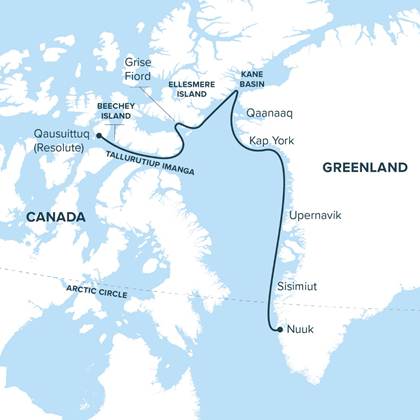
Itinerary
Day 1: Qausuittuq (Resolute), NU, Canada
Day 2: Beechey Island (Franklin’s expedition)
Day 3: Tallurutiup Imanga (Lancaster Sound)
Day 4: Aujuittuq (Grise Fjord)
Day 5: Ellesmere Island
Day 6: Kane Basin
Day 7: Alexandria Fjord
Day 8: Qaanaaq, Greenland
Day 9: Kap York
Day 10: At Sea
Day 11: Upernavik
Day 12: Western Greenland
Day 13: Qeqertarsuaq
Day 14: Sisimiut Coast
Day 15: Nuuk, Greenland
Highlights
The legacy of a Northern vision
In 1927, the Group of Seven turned to the Arctic, where endless horizons, crystalline light, and sculptural landscapes inspired a bold new way of seeing Canada. A century later, experience the same region where landscape and imagination continue to meet in luminous dialogue.
Beechey Island: a coast of enduring mysteries
Walk a wind-swept shore where the Franklin Expedition left its first trace. Weathered markers, Inuit oral history, and the rediscovery of HMS Erebus and HMS Terror still add chapters to a mystery nearly two centuries old.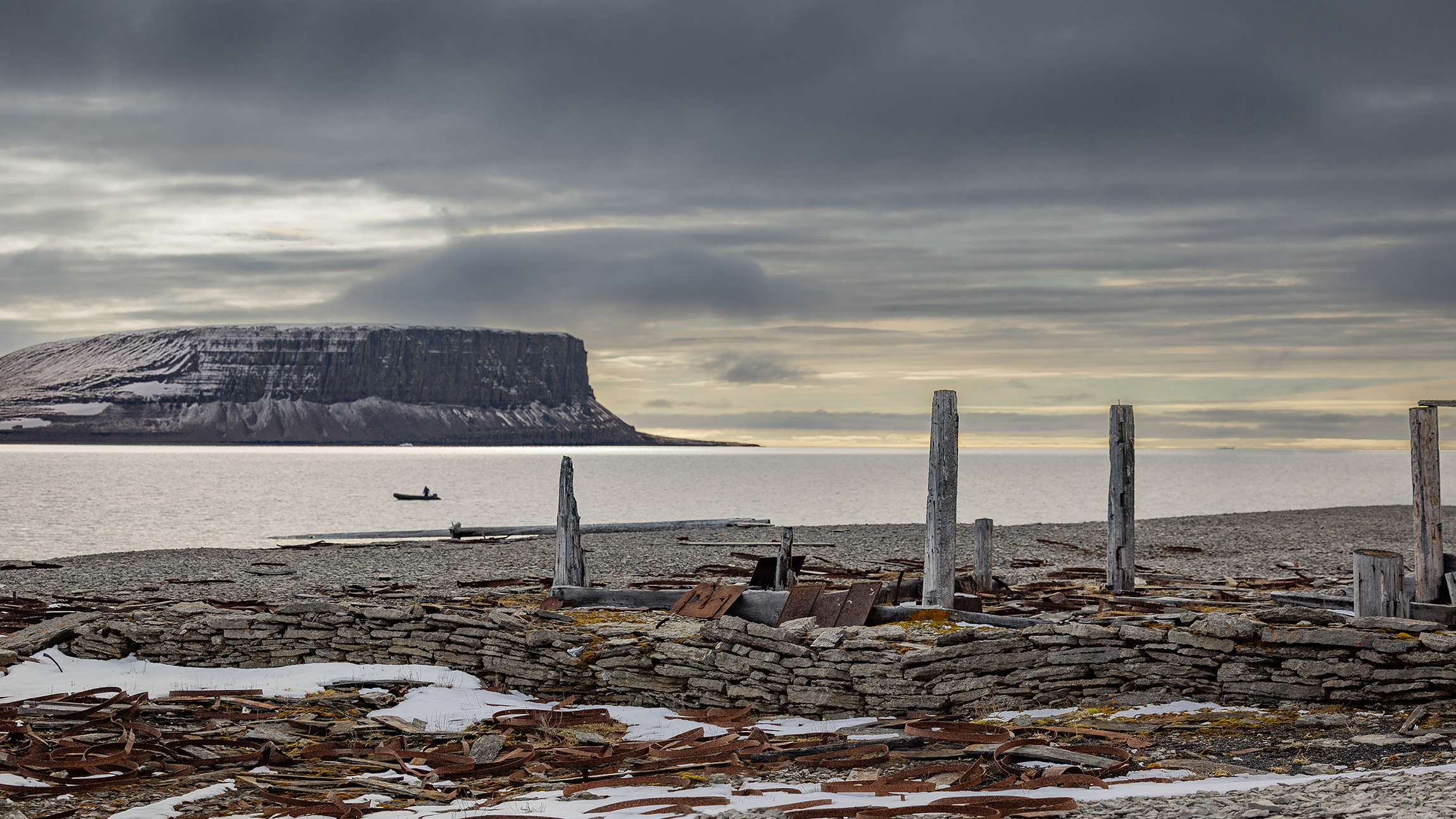
Tallurutiup Imanga and Devon Island: a living canvas
Watch whales surface against sculptural cliffs in a vast marine sanctuary. On Devon Island, the world’s largest uninhabited island, glacial valleys open like a painter’s study in form, light, and silence.
Aujuittuq: life at the top of Canada
Formerly known as Grise Fjord, this hamlet on Ellesmere Island is Canada’s northernmost community. In 1953, Inuit families were relocated here from northern Québec and Mittimatalik as part of Canada’s sovereignty efforts in the High Arctic. Listening to their stories of hardship and renewal, you’ll gain insight into how Inuit culture continues to adapt and thrive, carrying forward traditions in a land where beauty and resilience are inseparable.
Alexandria Fjord: an Arctic garden
Nestled within the stark geology of Canada’s northernmost island lies a place of unexpected abundance. At Alexandria Fjord, sheltered valleys bloom with wildflowers, mosses, and sedges—an oasis of colour and life framed by ice and stone. Walking here, you’ll feel the wonder of contrast: a soft, living carpet beneath cliffs carved by ancient glaciers. It’s a vivid reminder that even in the most austere landscapes, the Arctic nurtures life—and astonishment.
Nuuk: Greenland’s cultural heart
Greenland’s capital is a meeting place of tradition and modern life. Museums, galleries, and colourful architecture showcase a culture deeply rooted in Inuit heritage yet alive with contemporary creativity. Here, amid the glow of northern light, reflect on how the Arctic’s stories—past and present—continue to inspire.
Highlights
- Sail through the luminous northern realms that stirred the Group of Seven’s imagination and shaped a new way of seeing Canada.
- Walk the haunting shores of Beechey Island, where the Franklin Expedition’s story still whispers in the northern wind.
- Watch whales surface against sculpted cliffs in Tallurutiup Imanga and feel the wild majesty of Devon Island unfold.
- Stand in Aujuittuq, Canada’s northernmost community, and hear moving stories of Inuit endurance, adaptation, and pride.
- Wander through Alexandria Fjord, a hidden Arctic garden where wildflowers bloom beneath timeless cliffs of ice and stone.
- End your journey in Nuuk, Greenland’s vibrant cultural heart, where northern light illuminates art, heritage, and renewal.
John Geoghegan Bio
Title: Curator, McMichael Canadian Art Collection and Group of Seven Scholar
Short bio: John Geoghegan is a curator at the McMichael Canadian Art Collection and a recognized authority on the Group of Seven.
John Geoghegan is a curator at the McMichael Canadian Art Collection in Kleinburg, home to a comprehensive collection of works by members of the Group of Seven. Some recent research and publishing topics include the influence of Québec painting on members of the Group of Seven, the art of Kent Monkman, Elisapee Ishulutaq, Qavavau Manumie, and the influence of early Kinngait graphic artists on the contemporary art scene. He holds a master of arts in art history from York University and is a former senior editor of Inuit Art Quarterly, where he worked closely with many Inuit writers and artists.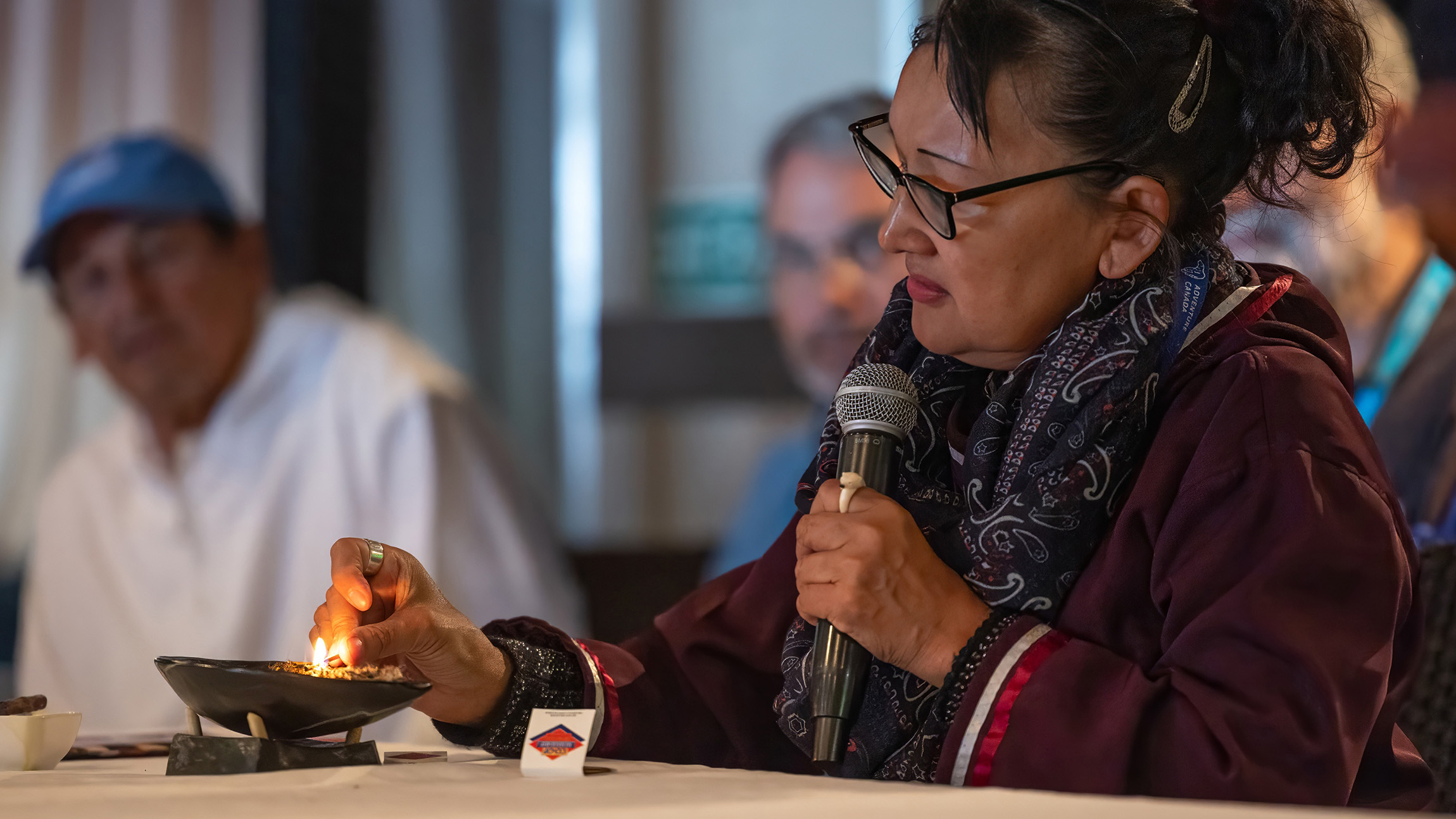
Itinerary
In the High Arctic, weather, ice, and community priorities guide every journey. Flexibility leads to the best discoveries.
Day 1: Qausuittuq (Resolute), NU, Canada
The North Beckons
Arrive by charter flight from Ottawa and step into Qausuittuq, set on gravel flats and moraine beneath the glow of continuous summer light. The community’s history of relocation in 1953 intertwines with its present role as a hub for Arctic research and travel. As you prepare to embark aboard the Ocean Nova, take time to orient yourself to the stories and landscapes that shape this place.
Day 2: Beechey Island
Echoes of Exploration
Come ashore on Beechey Island, where Arctic history feels near enough to touch. This windswept National Historic Site holds the graves of Franklin’s men and echoes of Inuit knowledge that helped uncover their fate. Here, Inuit knowledge has been central to uncovering the fate of Franklin’s lost ships, reshaping how this history is understood. As you walk the shoreline, the stark beauty invites reflection on exploration, endurance, and cultural memory—threads that still weave through this storied place.
Days 3: Tallurutiup Imanga (Lancaster Sound) & Devon Island
Whales, Ice, and Vast Horizons
Sail through Tallurutiup Imanga, one of Canada’s largest marine protected areas, alive with whales, seals, and seabirds. Beneath towering cliffs and drifting ice, the sea glimmers with shifting light. Step ashore on Devon Island, the world’s largest uninhabited island, where glaciers meet the sea and tundra unfolds in broad, glacial valleys. Here, light and silence create their own compositions, inviting stillness, reflection, and a deep sense of the Arctic’s living beauty.
Day 4: Aujuittuq (Grise Fjord)
Life in the Place That Never Thaws
Set amid stark mountains and sweeping tundra, Aujuittuq, “the place that never thaws,” is Canada’s northernmost community. Here, residents share powerful stories of their families’ 1953 relocation from northern Québec and Mittimatalik—stories of resilience and adaptation that continue to shape life here. Walking the tundra with local hosts, you’ll learn how deep knowledge of land, sea, and season sustain this community of enduring strength, ingenuity, and culture that define life at the top of the world.
Days 5: Ellesmere Island
Mountains at the Edge of the World
Explore the rugged coastline of Ellesmere, Canada’s most northerly island. Towering mountains, vast ice caps, and deep fjords define this northern wilderness. The austere beauty recalls Lawren Harris’s Arctic visions—landscapes of pure form and luminous stillness.
Day 6: Kane Basin
Where Continents Nearly Touch
Sail into Kane Basin, where Ellesmere Island and Greenland nearly meet. Glaciers tower, sea ice drifts, and the shifting Arctic light transforms every moment. For generations, Inuit navigated these passages with skill and insight—long before explorers heading toward the Pole followed in their wake.
Day 7: Alexandria Fjord
An Arctic Oasis
Framed by steep glacial cliffs and mirrored waters, Alexandria Fjord reveals a softer side of the High Arctic. In late summer, tundra mosses and wildflowers lend muted colour to the valley beneath sheltering peaks. Here, the stillness feels sacred—as though the land itself was holding its breath.
Day 8: Qaanaaq, Greenland
Heart of Inughuit Culture
Set against a backdrop of mountains and drifting sea ice, Qaanaaq is one of the world’s northernmost towns and a centre of Inughuit culture. Here, knowledge of the land, sea ice, and animals continues to shape daily life, alongside modern influences. Traditions such as dog-sledding and hunting remain vital to community identity, reflecting deep connections to place. Meeting residents offers a rare opportunity to experience a way of life defined by continuity, adaptation, and enduring northern relationships.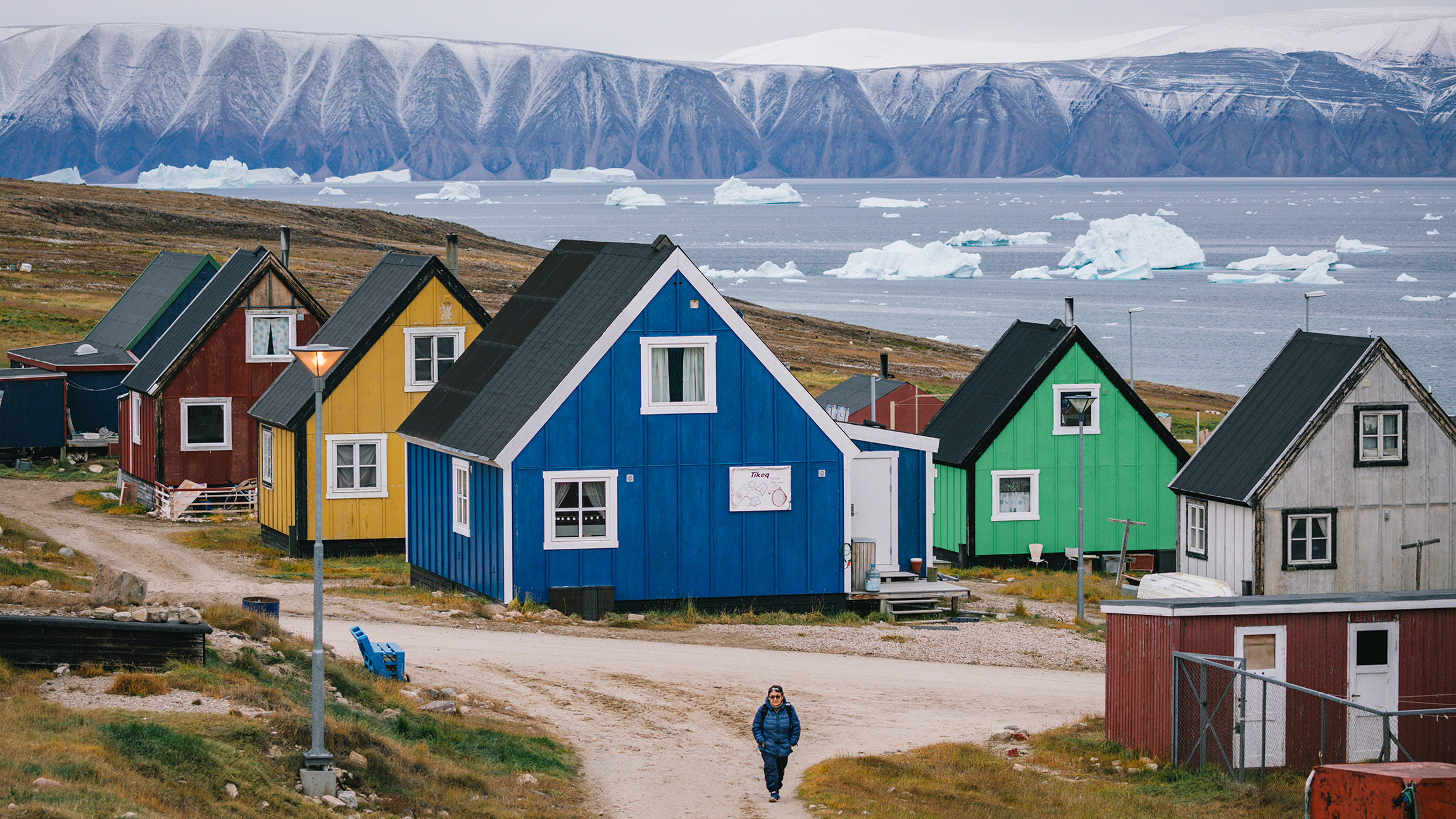
Day 9: Kap York
Land of Meteorite Iron
Step ashore at Kap York, where meteorite fragments once provided iron for tools. You’ll walk shores where geology, history, and human ingenuity intersect. Feel the stark forms and elemental contrasts of the landscape and recall the Group of Seven’s Arctic canvases, where every line and shadow carried story and spirit.
Day 10: At Sea
Crossing the Greenland Waters
Spend a day at sea as the ship sails south along Greenland’s rugged coast. Attend lectures, workshops, and cultural presentations that bring Arctic history, art, and ecology into sharper focus. From the deck, watch for whales surfacing among icebergs and seabirds soaring overhead, each fleeting moment a study in movement and light.
Day 11: Upernavik
Archipelago of Islands and Ice
Nestled amongst a maze of islands, Upernavik is a town where past and present meet on the edge of the Arctic. Visit Greenland’s oldest museum, founded in 1959, with exhibits housed in historic buildings that share stories of Inuit life and colonial history. This is also where a young Knud Rasmussen—later known for his Thule Expeditions—spent part of his youth learning the skills and traditions that shaped his future. As you wander among brightly painted houses and gaze over a sea strewn with ice, you’ll feel how deeply place and story intertwine here.
Day 12: West Greenland
Cathedrals of Ice
Sail among towering glaciers and drifting bergs, each one a shifting sculpture in white and blue. Fjords echo with the sound of calving ice, and mountains rise sheer above waters crowded with floes. The scale and geometry here—immense, elemental, ever-changing—recall the stark forms the Group of Seven once sought to capture in paint.
Day 13: Qeqertarsuaq
Volcanic Isle in Disko Bay
Visit Qeqertarsuaq on Disko Island, a place shaped by volcanic forces and known for striking geological contrasts. Black sand beaches meet basalt cliffs, while icebergs drift past offshore. Hike to a waterfall that cascades down from the high tundra plateau, carving bright paths through dark rock. The juxtapositions here—fiery geology against icy seas, flowing water against frozen forms—echo the Group of Seven’s fascination with elemental contrasts.
Day 14: Sisimiut Coast
Greenland’s Rugged Western Shore
Cruise along the dramatic Sisimiut coast, where mountains rise sharply from the sea and small settlements cling to the shoreline. This region reflects Greenland’s seafaring traditions, with communities deeply tied to land and water. As you sail, the shifting light across jagged peaks creates endless new scenes—each one a masterpiece of Arctic colour and form.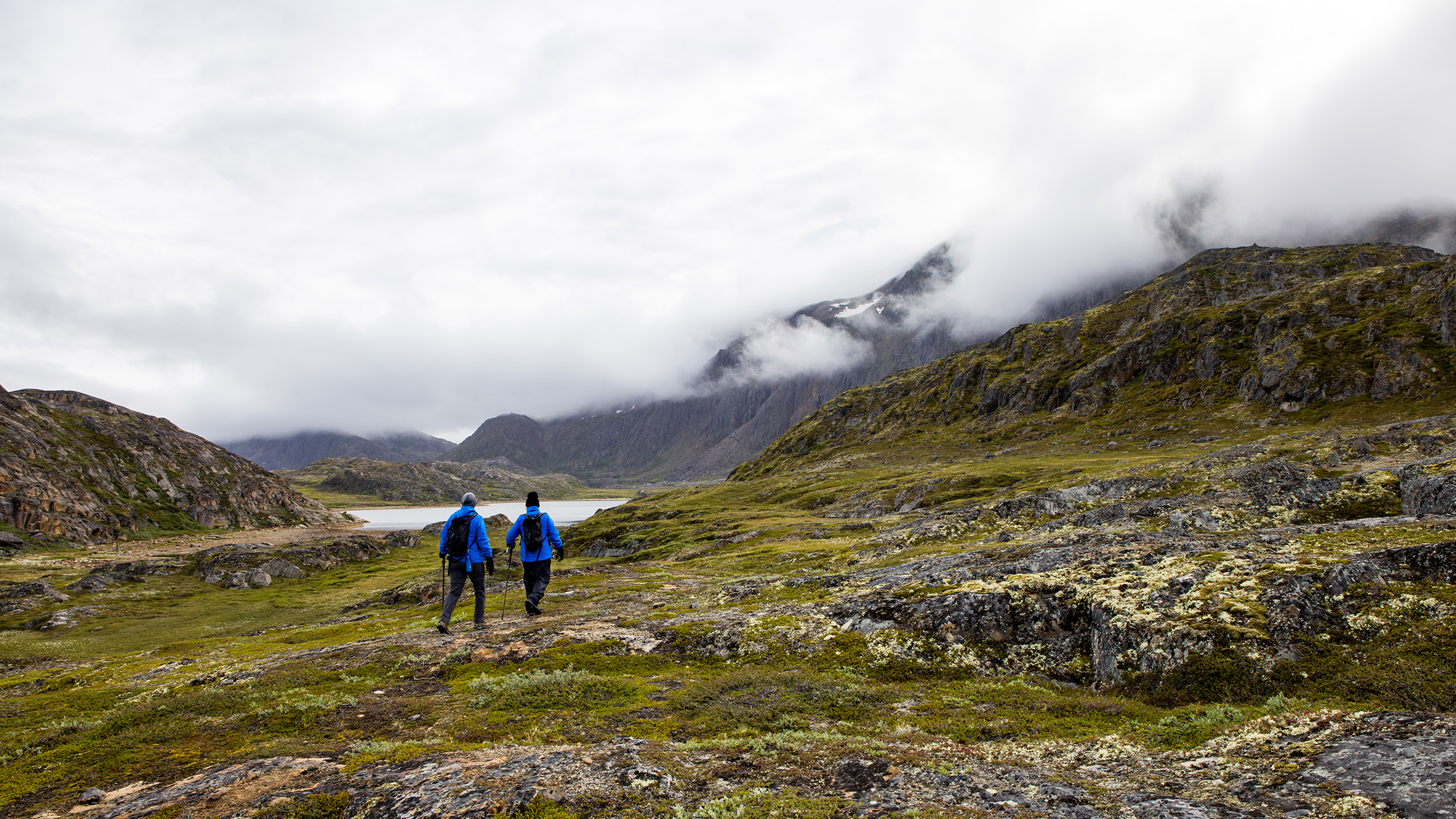
Day 15: Nuuk, Greenland
Greenland’s Capital and Cultural Heart
Your voyage concludes in Nuuk, Greenland’s vibrant capital. Explore its lively streets and visit museums that celebrate Inuit art and history. Here, traditional knowledge and modern life come together in creative conversation. Like the artists who once looked north for inspiration, you’ll return home with your vision reshaped by northern light and the enduring power of curiosity.